

Designing Services

Author name: poojajnv63@gmail.com

Uncategorized

How to Choose the Right Designing Services in 2026

In 2026, design has become an essential part of how businesses present themselves, communicate with customers, and compete in the digital marketplace. From social media creatives and branding to website design, advertisements, and UI/UX, professional design can influence how people perceive your business. However, choosing the right designing service can be challenging. There are many agencies, freelancers, and design platforms offering different services, packages, and creative styles. The right choice depends on your business goals, audience, budget, and the type of design you need. Here are some important factors to consider when choosing the right designing services in 2026. 1. Identify Your Design Requirements Before choosing a design service, understand exactly what your business needs. You may require: Clearly defining your requirements will help you find a designer or agency with the appropriate skills and experience. For example, if your primary goal is to improve your Instagram presence, look for a service specialising in social media design. If you are launching a new business, you may need a complete branding package. 2. Review the Portfolio A portfolio is one of the most important things to check before selecting a designing service. Look at previous projects to understand the quality, creativity, and versatility of the designer or agency. Pay attention to: Don’t choose a service simply because one project looks impressive. Review several projects to determine whether they can consistently deliver high-quality work. 3. Look for Relevant Experience Experience in your industry can be useful because different industries require different visual approaches. A technology company may need a modern and innovative identity, while a luxury brand may require a sophisticated visual style. Similarly, educational, healthcare, hospitality, fashion, and e-commerce businesses may have completely different design requirements. Choose a designing service that understands your industry or demonstrates the ability to adapt its creative approach to different audiences. 4. Focus on Strategy, Not Just Visuals Good design should do more than look attractive. Professional designing services should understand your business objectives, target audience, competitors, and brand personality before creating the final design. For example, a social media creative should not only be visually appealing. It should communicate the right message and encourage the desired audience action. In 2026, effective design is increasingly about combining creativity with strategy. 5. Check Their Use of Modern Design Tools Design technology continues to evolve rapidly. Modern designers use a combination of professional design software, digital workflows, animation tools, prototyping platforms, and AI-assisted technologies. AI can help designers explore concepts, generate variations, and speed up repetitive tasks. However, human creativity, strategic thinking, originality, and brand understanding remain essential. When choosing a design service, ask how they use modern technology while maintaining quality and originality. 6. Evaluate Communication Good communication can make a significant difference to the success of a design project. A professional designing service should listen to your requirements, understand your feedback, explain its ideas clearly, and keep you updated throughout the project. Before starting, discuss how communication will happen and how feedback will be handled. Clear communication reduces misunderstandings and helps ensure that the final design matches your expectations. 7. Understand Their Design Process A structured process can make a design project more efficient. A professional design process may include: Discovery → Research → Strategy → Concept → Design → Feedback → Refinement → Final Delivery This process ensures that designers understand the project before developing the final creative. Ask the service provider how they handle research, concepts, revisions, feedback, and final delivery. 8. Check Brand Consistency If you are hiring designing services for multiple platforms, brand consistency should be a priority. Your logo, colours, typography, imagery, social media creatives, website, advertisements, and printed materials should work together visually. A professional design service should be able to create or follow brand guidelines to maintain consistency across different platforms. Consistent branding helps customers recognise your business and creates a more professional appearance. 9. Compare Pricing and Deliverables Price is an important factor, but it shouldn’t be the only factor. Before choosing a service, understand exactly what you are paying for. Ask about: A low-cost service may not always provide the quality or support your business needs. Instead, compare the overall value, quality, communication, and expertise. 10. Consider Scalability Your design needs may change as your business grows. You might start with a logo and later require social media creatives, website graphics, advertisements, brochures, packaging, and other marketing materials. Choosing a designing service that can handle different requirements can make future projects easier and more consistent. A long-term creative partner can also become familiar with your brand and reduce the time needed to explain your visual preferences for every new project. 11. Read Reviews and Testimonials Client reviews can provide valuable information about the experience of working with a design service. Look for feedback about: Don’t rely only on testimonials displayed on the service provider’s own website. Where possible, look for independent reviews and detailed case studies. 12. Choose Quality Over Trends Design trends change quickly. What’s popular today may look outdated tomorrow. While modern design trends can provide creative inspiration, your brand shouldn’t depend entirely on them. Choose a designing service that can create visuals that are contemporary while still being distinctive and aligned with your brand identity. The goal is not simply to follow trends. It is to create a visual identity that remains useful and recognisable over time. Final Thoughts Choosing the right designing services in 2026 requires careful consideration. Your decision should be based on more than price or attractive sample designs. Look for a service that understands your business goals, target audience, brand identity, and industry. Review its portfolio, evaluate communication, understand the design process, check deliverables, and consider its ability to support your future needs. The best designing service combines creativity, technology, strategy, consistency, and professionalism to create visuals that help your business communicate effectively. Choose design that doesn’t just look good—choose design that makes your brand memorable, meaningful, and ready for the future.
Uncategorized

How Social Media Design Can Increase Engagement

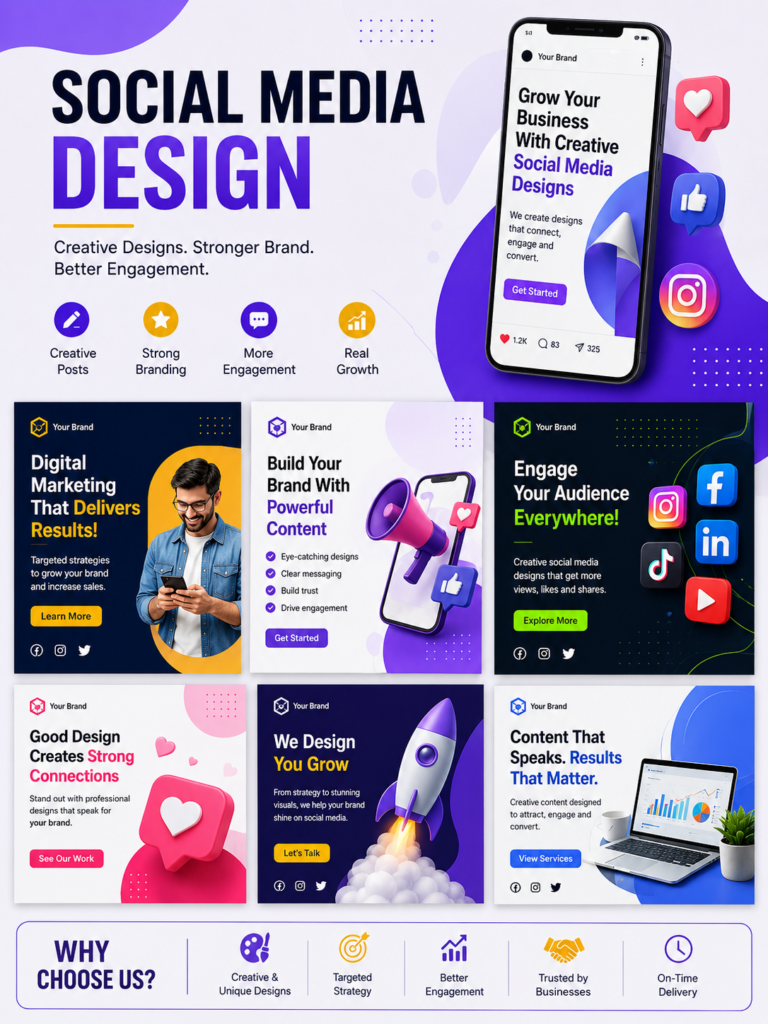
Social media has become one of the most powerful platforms for businesses to connect with their audience. Every day, people scroll through countless posts, videos, advertisements, and stories. With so much content competing for attention, simply posting regularly is no longer enough. Strong social media design can help your content stand out, communicate your message quickly, and encourage people to interact with your brand. From Instagram posts and Facebook creatives to LinkedIn graphics and promotional campaigns, thoughtful design can make a significant difference in how audiences respond to your content. 1. Captures Attention Quickly Social media users scroll quickly, which means you have only a short moment to capture their attention. An attractive design can make someone pause while scrolling and take a closer look at your content. Strong headlines, engaging visuals, clear layouts, and effective use of typography can help your post stand out in a crowded feed. The goal isn’t to fill your design with elements. Instead, focus on creating a visual that communicates the main idea quickly and clearly. 2. Makes Your Content Easy to Understand People don’t want to spend too much time trying to understand a social media post. Good design creates a clear visual hierarchy that guides the viewer from the most important information to supporting details. For example, a promotional graphic can highlight the offer first, followed by the key benefits and a clear call to action. When information is organised properly, users can understand your message at a glance. 3. Strengthens Brand Recognition Consistent social media design helps people recognise your brand. Using your brand colours, typography, logo, imagery, and design style across your posts creates a consistent visual identity. Over time, followers may begin to recognise your content even before they read the account name. This recognition can help your brand become more memorable and create a stronger connection with your audience. 4. Encourages Interaction Good design can encourage people to like, comment, share, save, or click on your content. For example, an educational carousel can encourage users to swipe through multiple slides. A question-based graphic can invite comments, while an informative checklist may encourage people to save the post for later. Design should support the purpose of the content. If your goal is engagement, the creative should make it easy for users to understand what action you want them to take. 5. Creates a Professional Brand Image Your social media profile is often one of the first places potential customers interact with your business. A professional and consistent feed can make your business appear more organised and credible. Poor-quality graphics, inconsistent layouts, or unclear visuals can distract users and weaken your overall presentation. Professional design helps create a stronger visual impression and shows that your brand pays attention to details. 6. Improves Content Readability Even the best message can be ignored if it is difficult to read. Typography plays an important role in social media design. Fonts should be clear, appropriately sized, and arranged in a way that makes the content easy to scan. Good contrast between text and background also improves readability. Instead of putting too much information into one graphic, focus on the most important message and use supporting content in the caption or additional slides. 7. Makes Educational Content More Engaging Educational content can sometimes feel difficult to consume, especially when presented as large blocks of text. Design can transform information into visually engaging content. Infographics, diagrams, carousel posts, icons, and illustrations can break complex topics into smaller and easier-to-understand sections. This makes educational content more accessible and can encourage users to spend more time interacting with the post. 8. Supports Different Types of Content Social media design isn’t limited to static posts. Brands can use design across: Each format has a different purpose, so the design should be adapted to the platform and audience while maintaining the brand’s overall visual identity. 9. Uses Visual Storytelling People naturally respond to stories, and design can help brands tell those stories visually. Instead of simply promoting a product, a brand can use images, graphics, typography, and layouts to show a problem, introduce a solution, and communicate the value of the product or service. Carousel posts are particularly useful for storytelling because information can be divided into multiple slides. A strong visual story can encourage users to continue viewing the content rather than scrolling past it. 10. Creates Better Calls to Action A call to action tells users what to do next. Examples include: Learn More | Shop Now | Get Started | Contact Us | Save This Post | Share Your Thoughts Design can make these calls to action more noticeable by giving them enough space and visual emphasis. A clear CTA can help turn attention into action. 11. Helps Content Stand Out From Competitors Your audience is likely seeing content from many businesses offering similar products or services. Unique and creative design can help differentiate your brand. Instead of copying popular templates exactly, develop a visual style that reflects your brand personality. Original layouts, illustrations, typography, photography, and creative concepts can give your social media presence a distinctive identity. 12. Builds Consistent Engagement Over Time Social media engagement isn’t created by one great post. It develops through consistent communication. When your brand regularly publishes useful, relevant, and visually appealing content, followers have more opportunities to interact with you. A consistent design system makes content creation easier while helping your audience recognise your posts. Over time, this combination of consistency and creativity can contribute to a stronger social media presence. Final Thoughts Social media design is more than making posts look attractive. It is about capturing attention, communicating clearly, creating recognition, and encouraging action. A strong design can help your content stand out, make information easier to understand, and give your brand a professional and memorable identity. Whether you’re creating educational carousels, promotional graphics, advertisements, Stories, or Reels covers, every design should have a clear purpose. Great social media design doesn’t just attract attention—it gives people a reason

Uncategorized

Tips for Creating Engaging Design Content

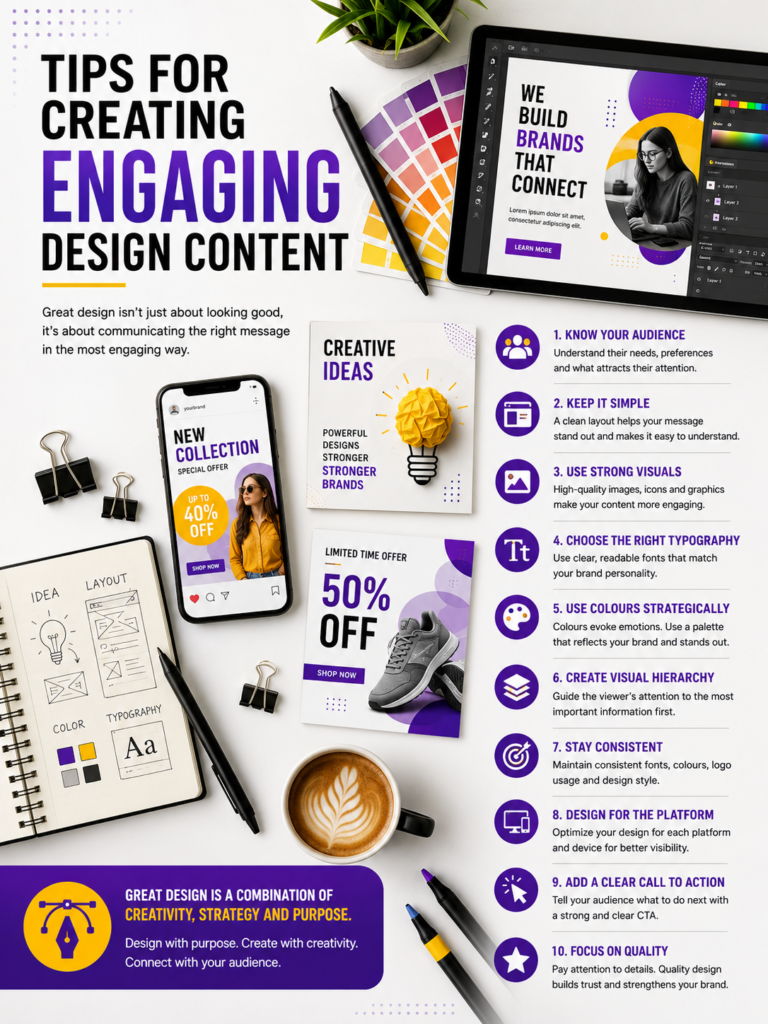
In today’s digital world, visual content plays an important role in how businesses attract attention and communicate with their audiences. Whether it is a social media post, advertisement, website banner, brochure, presentation, or promotional creative, good design can make your message easier to understand and more memorable. However, engaging design is not simply about using attractive colours, stylish fonts, or impressive images. Effective design combines creativity with strategy. It should communicate the right message to the right audience while maintaining a strong and consistent brand identity. Here are some important tips for creating design content that captures attention and creates a meaningful connection with your audience. 1. Understand Your Target Audience Before starting any design project, understand who you are designing for. Your target audience influences your choice of colours, typography, imagery, layout, and overall visual style. A design created for a young audience may have a completely different look from one created for a professional corporate audience. Understanding your audience helps ensure that your design feels relevant and relatable. Ask yourself: Who will see this design? What do they need? What kind of visual style will attract their attention? 2. Start With a Clear Objective Every design should have a purpose. Before creating a creative, identify what you want the audience to understand or do. Your goal could be to: When the objective is clear, it becomes easier to decide which visual elements should be included and which should be removed. 3. Keep the Design Simple One of the most common design mistakes is trying to include too much information in one creative. A cluttered design can confuse viewers and make the main message difficult to understand. Instead, focus on one primary message and organise supporting information around it. Use sufficient spacing, clear sections, and a balanced layout. Remember that simplicity does not mean boring. A simple design can be powerful when every element has a purpose. 4. Use Strong and Relevant Visuals Images are often the first element people notice. High-quality photographs, illustrations, icons, graphics, and other visual elements can make your content more engaging. However, visuals should always support the message. Avoid using images simply because they look attractive. Choose visuals that communicate your product, service, idea, or brand personality. Relevant imagery makes the design more meaningful and easier to understand. 5. Choose Typography Carefully Typography is one of the most important parts of graphic design. The right fonts can improve readability and communicate your brand personality. Use fonts that are easy to read and create a clear hierarchy between headings, subheadings, and supporting text. Avoid using too many different fonts in a single design. A combination of two or three complementary typefaces is often enough to create a professional visual structure. 6. Use Colours Strategically Colour can influence attention, emotion, and perception. A strong colour palette can make your design more attractive while reinforcing your brand identity. Choose colours that match your brand personality and create sufficient contrast between important elements. For example, a CTA should be visually noticeable, while background colours should not make the main text difficult to read. Most importantly, maintain consistency with your brand’s existing colour palette. 7. Create a Strong Visual Hierarchy Visual hierarchy tells viewers where to look first, second, and third. You can create hierarchy through: Your most important message should receive the strongest visual emphasis. Supporting information can then be presented at a smaller scale. A clear hierarchy allows viewers to understand your design quickly. 8. Maintain Brand Consistency Consistency helps people recognise your business across different platforms. Your social media creatives, website graphics, advertisements, brochures, and presentations should share common visual elements such as colours, typography, logo usage, imagery, and design style. A consistent identity makes your business look more professional and helps build familiarity with your audience. 9. Design for the Platform Every platform has different requirements and viewing behaviours. A design for Instagram may need a different layout from a LinkedIn graphic, website banner, printed brochure, or mobile advertisement. Always consider the platform, dimensions, screen size, readability, and user behaviour before creating the final design. A design that looks good on a desktop may not work effectively on a mobile screen. 10. Add a Clear Call to Action If your design is intended to encourage an action, make that action clear. Examples include: Learn More | Contact Us | Get Started | Shop Now | Book Today | Explore Services A clear call to action helps guide the audience toward the next step. The CTA should be noticeable without overpowering the main message. 11. Use Design to Tell a Story Great design can communicate a story without requiring large amounts of text. Use images, layouts, colours, illustrations, and typography to create a visual journey. For example, a campaign can introduce a problem, present the solution, highlight benefits, and finish with a call to action. Visual storytelling can make content more interesting and help audiences connect with the message. 12. Focus on Quality and Details Small details can have a big impact on the overall appearance of a design. Check alignment, spacing, typography, image quality, colour consistency, spelling, and proportions before publishing. Professional design is often recognised through these details. A well-finished creative communicates care and attention to quality. 13. Test and Improve Your Designs Design should not always be treated as a one-time process. Different audiences may respond differently to visual styles. If you are creating digital marketing content, monitor engagement and performance to understand what works best. You can experiment with different layouts, headlines, images, colours, and creative approaches while maintaining your core brand identity. Using performance insights can help you continuously improve your design strategy. How Professional Design Can Strengthen Your Brand Engaging design content can help businesses communicate more effectively and create a stronger visual identity. Professional design brings together creativity, strategy, branding, and audience understanding to create visuals that have a clear purpose. A professional designer does more than select colours and fonts. They consider the business objective, target audience,

Scroll to Top